
How Anti-Fatigue Mats Help Reduce Back Pain: Everything You Need to Know
If you spend long hours standing, whether in the kitchen, workshop, or at a standing desk, you’ve likely felt the toll on your lower back. Fortunately, there’s a simple yet powerful solution: anti-fatigue mats.
In this article, we’ll explore whether anti-fatigue mats can relieve back pain.
In this article, you will learn:
- What anti-fatigue mats are and how they work.
- The science behind anti-fatigue mats and their impact on back pain.
- Tips for choosing the right anti-fatigue mat for your needs.
Let’s dive into understanding what anti-fatigue mats are and how they might be the solution to your back pain problems.
Do Anti-Fatigue Mats Really Help with Back Pain?
Yes, anti-fatigue mats do help with back pain. By helping people to distribute the pressure of standing for long periods through the feet, they reduce the strain on your back.
And now that you know this, we’ll explain more about how they work.
Understanding Anti-Fatigue Mats
Anti-fatigue mats are specially designed floor mats intended to reduce fatigue caused by standing for long periods on hard surfaces. These mats are often made from materials like rubber, foam, or gel, providing a softer surface that encourages subtle movements of the leg muscles. This promotes better blood circulation and reduces the strain on the muscles and joints.
The design of anti-fatigue mats aims to create a more comfortable standing experience. By providing a cushioning effect, these mats help distribute pressure more evenly across the feet and reduce stress on the lower back. The slight instability introduced by the mat encourages constant micro-movements that keep the muscles engaged and reduce the feeling of fatigue.
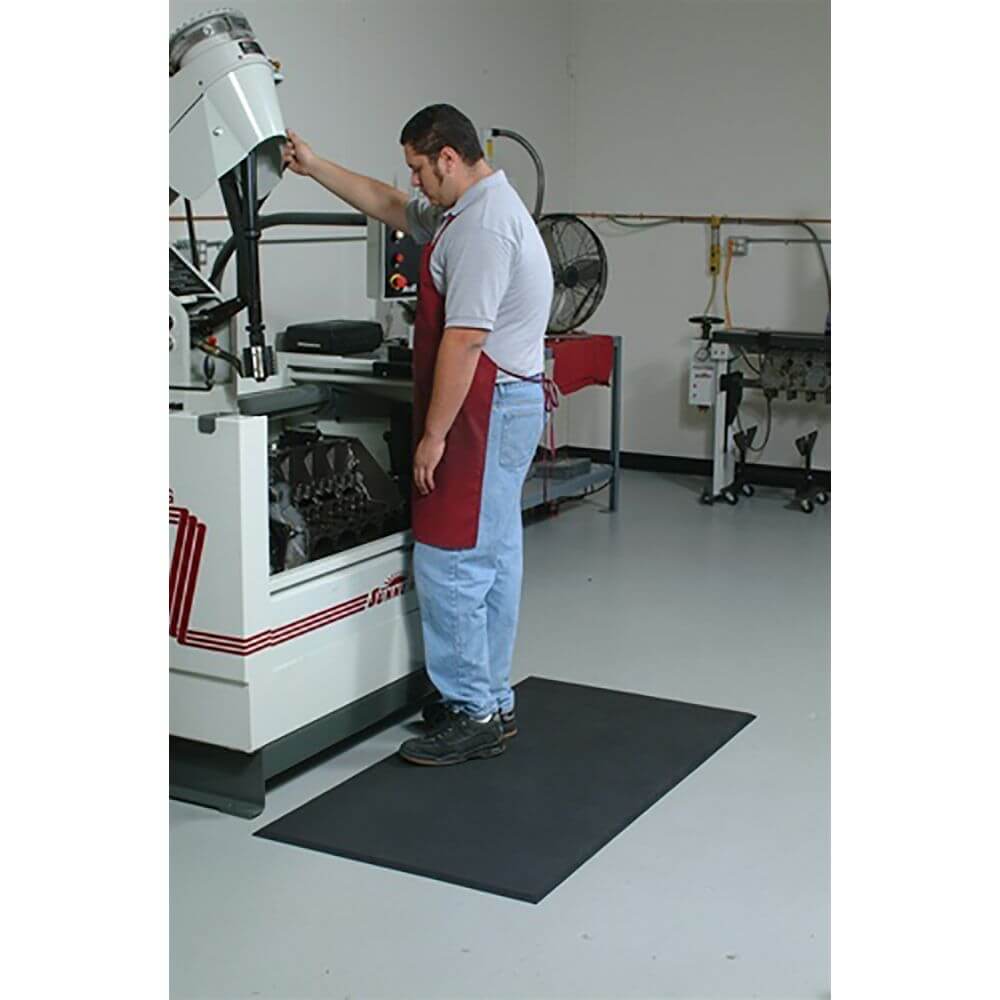
Anti-fatigue mats are commonly used in environments where prolonged standing is a part of the daily routine. These environments include workplaces like factories, retail stores, and offices with standing desks, as well as home settings such as kitchens and laundry rooms.
Benefits of Using an Anti-Fatigue Mat
Hours of standing can leave your legs tired and your lower back sore. A good anti fatigue floor mat provides comfort and stress relief and helps you feel relaxed. It softens the hard surface, allows your body to move a little, and makes standing feel easier, whether at work, at home, or behind a counter.
Can Help Reduce Fatigue and Discomfort
Solid floors don’t absorb impact, so every step transfers force back into your joints and lower spine. Using mats for back pain relief spreads the weight more evenly and eases the strain. It’s a small change that can help relieve pain, reduce stiffness, and keep you on your feet longer by reducing discomfort.
Can Help Improve Posture
When you stand on a mat instead of bare concrete, the mat’s surface slightly compresses under your weight. That small cushion provided by support mats for standing keeps your body shifting just enough to stay balanced and aligned. A good anti fatigue standing mat supports better posture and eases muscle tension through the day.
Encourages Subtle Movements
Anti-fatigue mats don’t keep you perfectly still. These mats help you shift a little, roll your feet, and adjust your balance without you noticing it. These micro-movements improve blood flow and make it easier to fight fatigue from standing for long stretches. For warehouses or factories, durable industrial mats for standing help staff maintain energy through long shifts.
Supports an Eco-Friendly Lifestyle
Many anti fatigue mats for work now use recycled rubber or long-lasting foam blends. They last for years and need fewer replacements. Choosing durable products helps reduce stress on your body and also cuts down on waste. Resorting to these mats is thus a quiet way to care for yourself as well as the planet.
How Anti-Fatigue Mats Work: The Science Explained
Standing for extended periods can cause significant strain on the body, particularly the lower back and legs. When you stand on a hard surface, your muscles become static, which can lead to decreased blood flow and increased discomfort. Anti-fatigue mats are designed to counteract these effects by promoting subtle movements and improving circulation.
The mechanics of standing involve constant muscle contractions to maintain balance and posture. On hard surfaces, these muscles can become overworked and fatigued. Anti-fatigue mats introduce a slight instability, causing the body to make continuous micro-adjustments. This constant movement helps distribute pressure more evenly and keeps the muscles active, reducing the likelihood of fatigue.
Several scientific studies support the effectiveness of anti-fatigue mats. Research has shown that using these mats can significantly reduce discomfort and fatigue in the lower back and legs.
For example, a study published in PubMed examined the impact of anti-fatigue mats on low back pain and muscle activation. It found that anti-fatigue mats significantly decreased subjective low back pain levels in 15 out of 16 participants compared to standing on a hard surface.
Expert opinions also support the use of anti-fatigue mats. Ergonomists and occupational health professionals recommend them as part of a comprehensive strategy to improve workplace ergonomics and reduce the risk of musculoskeletal disorders.
How to Choose the Best Anti-Fatigue Mat for Back Pain Relief
Selecting the right anti-fatigue mat is crucial to ensuring you get the maximum benefits for back pain relief. Here are some important features to consider when choosing an anti-fatigue mat:
- Material: Anti-fatigue mats come in various materials, including rubber, foam, gel, and vinyl. Each material offers different levels of cushioning and durability. For example, rubber mats are highly durable and suitable for heavy-duty use, while foam mats provide excellent cushioning for less intense environments.
- Thickness: The thickness of the mat affects its cushioning properties. Thicker mats generally offer more comfort but may also create more instability. A good balance is essential; typically, mats between 3/8 inch and 3/4 inch thick are effective for reducing back pain without causing excessive instability.
- Size and Shape: The size and shape of the mat should match your workspace. Ensure the mat is large enough to allow comfortable movement but not so large that it becomes a tripping hazard. Common shapes include rectangular and ergonomic designs that fit the contours of a standing desk or workstation.
- Surface Texture: The surface texture can affect both comfort and safety. A textured surface provides better grip and reduces the risk of slipping, while a smooth surface might be easier to clean but could be less secure.
- Edges and Beveling: Look for mats with beveled edges to prevent tripping and to allow smooth transitions on and off the mat. Beveled edges are particularly important in high-traffic areas to reduce the risk of accidents.
- Durability and Warranty: Consider the mat’s durability and the manufacturer’s warranty. High-quality mats often come with extended warranties, reflecting their durability and the manufacturer’s confidence in the product.
Recommendations for Various Use Cases
So, what are the best mats for pain relief? That depends on your use case:
- Office Use: For standing desks in an office setting, consider a medium-thickness foam or gel mat with a smooth, easy-to-clean surface and beveled edges for safety.
- Home Use: In areas like the kitchen or laundry room, a rubber mat with a textured surface and moderate thickness provides a good balance of comfort and durability.
- Industrial Use: For heavy-duty environments such as factories or workshops, a thick rubber mat with enhanced durability and a textured, non-slip surface is ideal.
While anti-fatigue mats are designed to reduce strain from standing, some people also explore other solutions for back pain, such as acupressure mats. Products like the ProsourceFit Acupressure Mat use small spikes to stimulate pressure points and promote muscle relaxation and improved circulation.
Acupressure mats are typically used on bare skin to maximize their therapeutic effects. These mats are more suitable for short sessions of lying or sitting rather than standing and can complement your pain management routine outside of work or standing environments.
Conclusion
Anti-fatigue mats can be a valuable tool in reducing back pain for those who spend long hours standing. By providing a cushioned surface that promotes subtle movements, these mats help improve circulation and reduce muscle fatigue, ultimately alleviating pressure on the lower back.
In this article, you learned:
- What anti-fatigue mats are and how they work to reduce back pain.
- The science behind their effectiveness, supported by studies and expert opinions.
- Tips for choosing the right anti-fatigue mat.
Incorporating the right anti-fatigue mat and following ergonomic best practices can significantly improve your standing comfort and overall back health.
And if you would like some help choosing the best anti-fatigue mat, get in touch with our team at Ultimate Mats.
Frequently Asked Questions (FAQs)
Do anti-fatigue mats work for standing desks?
Yes, anti-fatigue mats work very well for standing desks. They are designed to reduce discomfort, fatigue, and pressure on your feet, legs, and lower back during long periods of standing. The mats improve the blood flow and reduce strain on your legs. If you use a standing desk, an anti-fatigue mat can make a noticeable difference in your comfort and energy levels throughout the day.
How thick should an anti-fatigue mat be?
The thickness of the anti-fatigue mat displays its cushioning properties, which in turn determine its comfort levels. The ideal thickness is between 3/8 inch and 3/4 inch, effectively reducing back pain without causing excessive instability. Remember that a mat that is too thin won’t relieve pressure, and a mat that is too thick may feel unstable.
Can these mats help with knee pain, too?
Yes, anti-fatigue mats can also help with knee pain. They provide cushioning that reduces pressure on the joints, including the knees, especially during long periods of standing. By encouraging micro-movements and better posture, these mats improve circulation and reduce strain on your lower body. While they may not cure underlying knee problems, they can significantly relieve discomfort and prevent knees from being strained further.
What’s the best anti-fatigue mat material?
Anti-fatigue mats are made of various materials, including rubber, foam, gel, and vinyl. Each material offers different levels of cushioning and durability. For instance, rubber mats are durable, slip-resistant, and perfect for industrial or kitchen environments. Gel mats, on the other hand, offer superior comfort and are great for reducing joint pain. The different materials offer different advantages; the material you choose depends on your needs.
How long do anti-fatigue mats last?
Anti-fatigue mats typically last several years, depending on the materials, usage, and the environment. High-quality mats made from rubber or gel last longer with proper care. In high-traffic or industrial areas, they may wear out sooner, while mats used in home and office settings usually last longer. Regular cleaning and avoiding harsh chemicals to wash them may increase their lifespan.
Thanks for reading.
David Chapman

